A broadside collision was reported on Jul 4, 2026 at approximately 9:00 PM on Vanowen Street near Goodland Avenue in Valley Glen, California. Clear weather was noted at the time of the crash. 1 person was injured. This crash was classified as a motorcycle accident case.
If you were involved, the other driver's insurance company may have already contacted you with a settlement offer. Early offers are often lower than what your claim is actually worth. Insurers count on people settling before they understand the full extent of their injuries. You have two years from the date of the accident to file a personal injury claim in California, but key evidence like surveillance footage and witness memories doesn't last that long. A free consultation with our senior attorneys costs you nothing and helps you understand your options.
Your attorney
Senior Attorneys, Not a Call Center
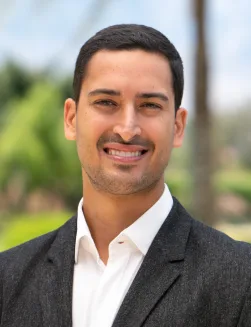
I grew up in the San Fernando Valley, graduated from El Camino Real High School and UCLA Law School, and I've spent my career representing people who were hurt because someone else wasn't paying attention. I take these cases personally because I've watched families in this community deal with the aftermath of serious crashes. If you were injured, I want to hear what happened.
Arya Firoozmand, Esq.
Founding Partner · UCLA Law
You're not a case number here. Every case I take is personal.
Could the road be at fault?
Not Every Crash Is the Driver's Fault
Some crashes are caused by dangerous road conditions: poor sight lines, missing signage, bad signal timing, or roads that weren't designed for the traffic they carry. In California, cities, counties, and Caltrans can be held liable when they knew or should have known about a dangerous condition and failed to fix it. If the road played a role in this crash, you may have a claim against the government agency responsible for maintaining it.
Injured at a Dangerous Intersection? The City May Owe You Compensation.
When a road or intersection is poorly designed, the government agency responsible for maintaining it can be held liable. If you were seriously hurt, talk to a senior attorney about whether a dangerous road design claim applies to your case.
Government claims are often subject to strict filing deadlines. An attorney can help you understand what applies to your situation.
Next steps
What to Do After a Motorcycle Accident
Get medical attention immediately
Even if you feel fine, get checked out. Some of the most serious injuries from crashes, like internal bleeding and traumatic brain injuries, don't always show symptoms right away. A medical record from the day of the crash also becomes critical evidence later.
Document the road conditions at the scene
Gravel, oil slicks, potholes, uneven pavement, and faded lane markings are invisible to investigators who arrive hours later. Take close-up photos of the road surface, any debris, and anything that could have contributed to the crash before the scene gets cleaned up.
Don't accept blame for lane splitting
California is the only state that explicitly allows lane splitting under Vehicle Code 21658.1. Insurance adjusters and even police officers sometimes treat lane splitting as automatic fault. It isn't. Whether you were splitting legally is a separate question from who caused the crash.
File your government tort claim before January 4, 2027
If a government entity is responsible for this crash, whether because of road design, missing signals, or a government vehicle, you have a strict six-month deadline to file a tort claim. That deadline is January 4, 2027. Miss it and you lose your right to sue entirely, no matter how strong your case is.
Talk to a personal injury attorney before the insurance company
Insurance adjusters will reach out quickly, and they're not calling to help you. They want a recorded statement and a fast settlement before you understand what your case is actually worth. A free consultation with an attorney costs you nothing and protects everything.
Motorcycle accident law
How California Law Treats Motorcycle Riders
California is the only state that explicitly legalizes lane splitting under Vehicle Code 21658.1. But legality doesn't stop insurance adjusters from treating it like automatic fault. If you were lane splitting at the time of the crash, the question is whether you were doing it safely given traffic speed and conditions, not whether you were doing it at all.
Rider bias is real and it shows up everywhere, from police reports to jury pools. Officers sometimes assume the motorcyclist was at fault without investigating further. Jurors sometimes see riding a motorcycle as inherently risky, which gets twisted into blame. A good attorney knows how to reframe the narrative around what the other driver actually did wrong.
Motorcycle crash injuries tend to be severe: road rash, broken bones, spinal injuries, and traumatic brain injuries are common even at lower speeds. The absence of protective steel around a rider doesn't reduce the driver's liability. Damages should reflect the full extent of injuries, not some discounted amount because you chose a motorcycle.
Our founding partners trained at UCLA Law and built L&F Brown on a simple idea: take fewer cases, fight harder on each one. You work directly with a senior attorney from your first call through settlement. No hand-offs, no assembly line.
6,000+ Cases75+ Years CombinedMartindale-Hubbell Preeminent
Dangerous road design
Why Broadside Collisions Happen Here
Broadside collisions, sometimes called T-bone crashes, happen when one vehicle strikes the side of another. At intersections, these are often caused by inadequate sight lines, poorly timed signals, or missing protected left-turn phases. When a driver can't see oncoming traffic until it's too late, the intersection design shares responsibility.
Under California Government Code 835, a public entity can be liable for a "dangerous condition" on public property. An intersection with a history of broadside crashes, especially one where the signal timing hasn't been updated to match current traffic volumes, may qualify. Crash history data is key evidence in these claims.
This crash happened during evening hours (7-10 PM), when reduced visibility starts to play a role. Inadequate street lighting, missing reflective lane markings, and unlit crosswalks all become more dangerous as daylight fades.
Injured in a car accident in Valley Glen?
If you or someone you love was hurt in a car accident in Valley Glen, our attorneys can help you understand your options. We handle cases on contingency, so you pay nothing unless we win.
Yes. California is the only state that explicitly legalizes lane splitting under Vehicle Code 21658.1. The law doesn't set specific speed limits for lane splitting, but the CHP recommends it only when traffic is moving at 30 mph or less and the rider isn't going more than 10 mph faster than surrounding traffic. Lane splitting alone is not evidence of fault.
Do motorcycle riders face bias in accident claims?
Unfortunately, yes. Insurance adjusters, police officers, and jurors sometimes view motorcycling as inherently risky and assign more blame to the rider than the evidence supports. This is why documentation is so important in motorcycle cases. Photos of the scene, witness statements, and expert reconstruction can counter that bias effectively.
What damages can a motorcycle accident victim recover?
The same damages as any other motor vehicle crash: medical bills, lost wages, pain and suffering, and property damage. Motorcycle injuries tend to be more severe, so damages are often higher. The fact that you were on a motorcycle rather than in a car does not reduce what you're entitled to recover.
How do I know if my injuries are serious enough to file a claim?
There's no minimum injury threshold for filing a personal injury claim in California. If someone else's negligence caused your injuries and you have medical bills, lost wages, or pain and suffering, you likely have a valid claim. Many injuries that seem minor at first, like whiplash or soft tissue damage, can develop into chronic conditions. Get a medical evaluation and a legal consultation.
What is the government tort claim deadline of January 4, 2027?
If a government entity shares responsibility for this crash, whether through road design, a government vehicle, or maintenance failures, you must file a government tort claim within six months of the incident. For this crash, that deadline is January 4, 2027. This is separate from the two-year statute of limitations. Miss it and your claim against the government is gone permanently, even if the road design was clearly at fault.
No commitment. Speak directly with a senior attorney.
Client Stories
Hear From the People We've Helped
Scott MacDonell
Not only was Arya easy to communicate with, incredibly intelligent with how he planned to achieve the goals, but he was also very warm and caring. I really enjoyed working with Arya. Warm, ethical, and intelligent is a great combo!
Anna Bugayong
I cannot recommend L&F Brown highly enough. From the start of my case they were professional, talked me through the process and genuinely cared about my situation and concerns. My case went far longer than any of us expected, and I was ready to just accept the first settlement, but Arya and Curt fought to get me what I was entitled to. All in all, they went above and beyond at every step and I felt supported throughout my experience with them.
V
Vesper Wen
My husband was involved in a car accident back in February, and now that everything has been resolved, I just wanted to say how grateful we are for this amazing team. Everyone was incredibly kind, organized, and easy to communicate with. They always kept us updated, answered every question we had, and made sure we understood what was happening every step of the way. Having someone we could trust took so much stress off our shoulders during an already difficult time.
By the Numbers
75+
Years Legal Experience
6,000+
Clients Served
One
Case at a Time
See how our senior attorneys can help with your case
UCLA Law trained. Personalized care. Life-changing results.




 6,000+ Cases 75+ Years Combined Martindale-Hubbell Preeminent